Spend £150 for 20% Off | Spend £500 for 30% Off
Spend £150 for 20% Off | Spend £500 for 30% Off
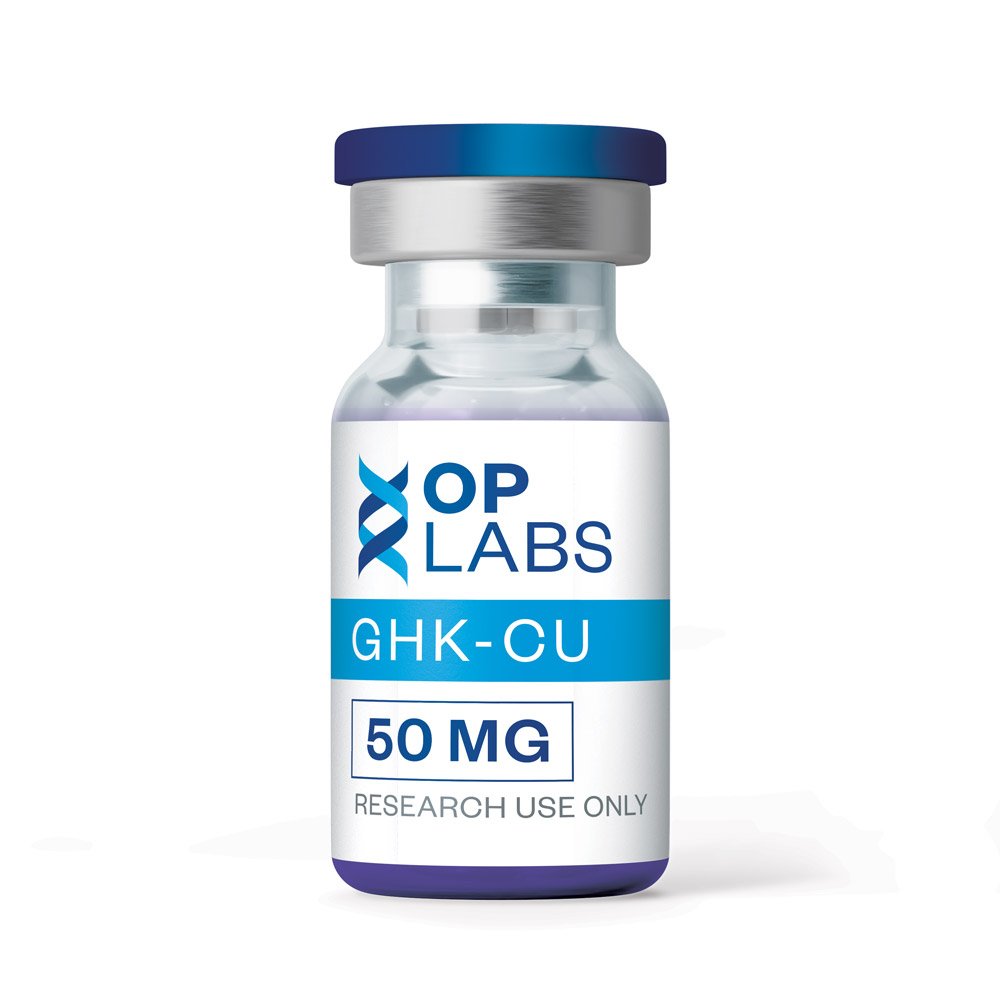



£15.99
| Volume Pricing | |
|---|---|
| Spend £150+ (20% off) | £23.12 |
| Spend £500+ (30% off) | £20.23 |
Spending over £1000? Email us your order and we will custom price.
Free shipping on orders over £20

ALL ARTICLES AND PRODUCT INFORMATION PROVIDED ON THIS WEBSITE ARE FOR INFORMATIONAL AND EDUCATIONAL PURPOSES ONLY.
The products offered on this website are furnished for in-vitro studies only. In-vitro studies are performed outside of the body. These products are not medicines or drugs and have not been approved to prevent, treat or cure any medical condition, ailment or disease. Bodily introduction of any kind into humans or animals is strictly forbidden.
GHK-Cu is a naturally occurring copper–peptide complex that functions as an endogenous signalling molecule involved in metal ion transport and cellular regulation. It consists of the tripeptide glycyl-L-histidyl-L-lysine complexed with a divalent copper ion, forming a high-affinity chelate that facilitates controlled copper delivery within biological systems. In biochemical and cellular research settings, GHK-Cu modulates cellular signalling processes through both peptide-mediated interactions and copper-dependent biochemical activity.
Copper is an essential trace element required for numerous enzymatic and structural proteins involved in redox balance, extracellular matrix organisation, and cellular metabolism. By acting as a carrier and regulator of bioavailable copper, GHK-Cu plays a role in maintaining metal homeostasis and influencing downstream pathways linked to cellular growth, differentiation, and tissue remodelling.
In preclinical research models, exposure to GHK-Cu has been associated with altered gene expression patterns and modulation of signalling pathways related to extracellular matrix dynamics, oxidative stress response, and cellular turnover. These effects are context-dependent and vary with concentration, exposure duration, and experimental system, making GHK-Cu a widely used molecular tool for investigating copper-mediated signalling and peptide–metal interactions in vitro and in vivo.
| Parameter | Typical Value / Range |
|---|---|
| Purity (HPLC) | ≥ 99 |
| Appearance | Blue to deep blue lyophilised powder |
| Molecular Weight | 403.92 g/mol |
| Compound Type | Copper-binding tripeptide |
| Solubility | Water, dilute acids, DMSO |
| Storage | –20 °C, desiccated, dark |
| Pack Size | 3,000 mg (bulk) |