Spend £150 for 20% Off | Spend £500 for 30% Off
Spend £150 for 20% Off | Spend £500 for 30% Off




£49.90
| Volume Pricing | |
|---|---|
| Spend £150+ (20% off) | £23.12 |
| Spend £500+ (30% off) | £20.23 |
Spending over £1000? Email us your order and we will custom price.
Free shipping on orders over £20

ALL ARTICLES AND PRODUCT INFORMATION PROVIDED ON THIS WEBSITE ARE FOR INFORMATIONAL AND EDUCATIONAL PURPOSES ONLY.
The products offered on this website are furnished for in-vitro studies only. In-vitro studies are performed outside of the body. These products are not medicines or drugs and have not been approved to prevent, treat or cure any medical condition, ailment or disease. Bodily introduction of any kind into humans or animals is strictly forbidden.
B7-33 is a 26-residue single-chain peptide derived from the B-chain of human relaxin-2. In research contexts it is studied as a molecular probe for signalling through the relaxin family peptide receptor 1 (RXFP1), a G protein-coupled receptor, providing a defined single-chain alternative to recombinant two-chain relaxin for receptor-pharmacology studies.
In cell-based assays B7-33 behaves as a functionally selective (“biased”) agonist, preferentially engaging the pERK1/2 signalling arm with comparatively weaker cAMP accumulation relative to native relaxin-2. In cultured fibroblast and tissue models, RXFP1 engagement has been used to interrogate TGF-β/Smad2 signalling and matrix metalloproteinase expression. Observed responses are dependent on experimental conditions, concentration and model system; the peptide is used as a molecular probe rather than for defined physiological outcomes.
| Parameter | Typical Value / Range |
|---|---|
| Purity (HPLC) | ≥ 99 % |
| Appearance | White to off-white lyophilised powder |
| Molecular Weight | 2986.58 g/mol |
| Peptide Type | Synthetic single-chain relaxin-family peptide (RXFP1 receptor agonist) |
| Solubility | Water, buffered aqueous solutions |
| Storage | –20 °C, desiccated, dark |
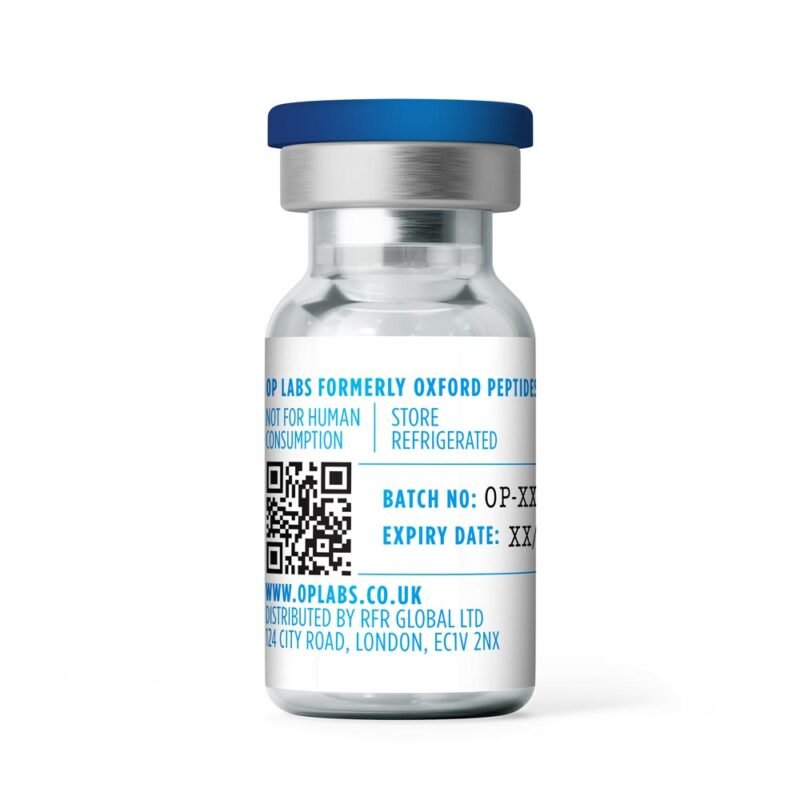
| Pack Size | 6 mg (total) |