Description
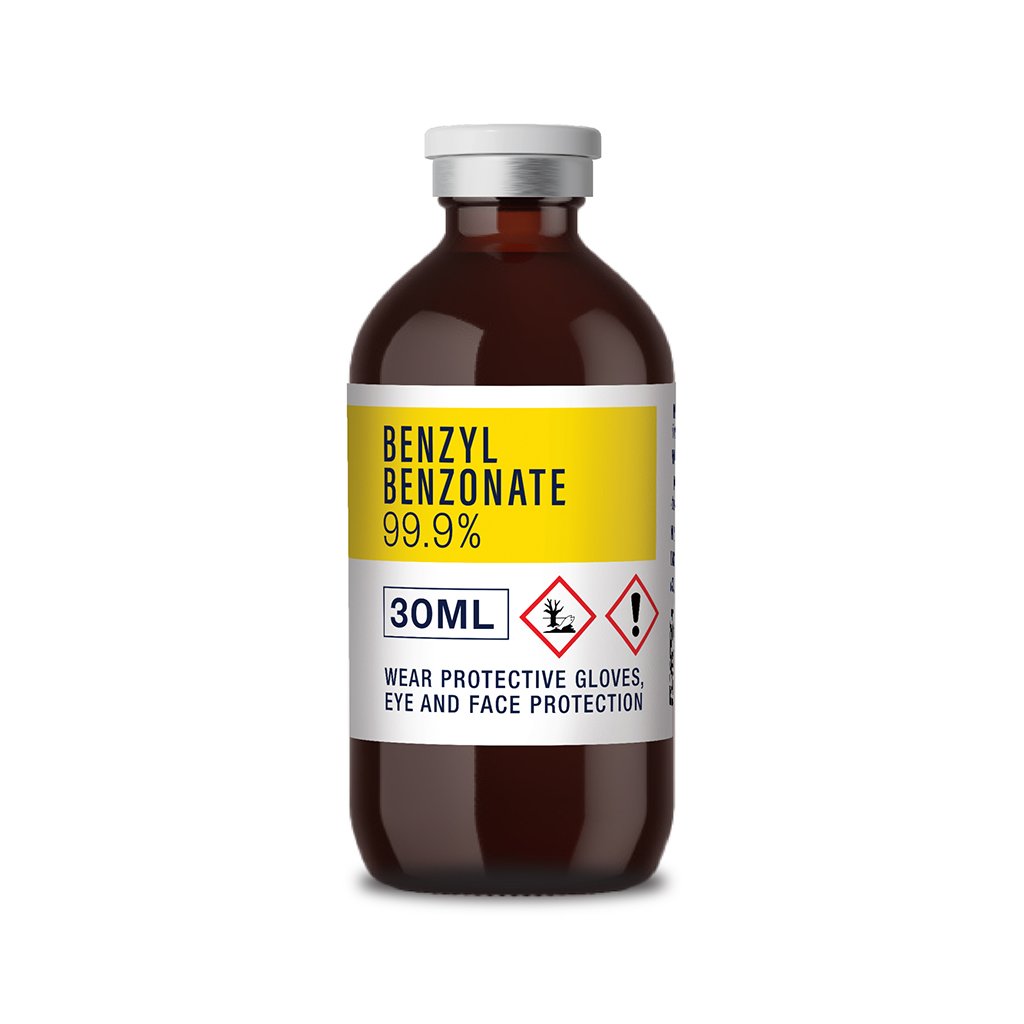
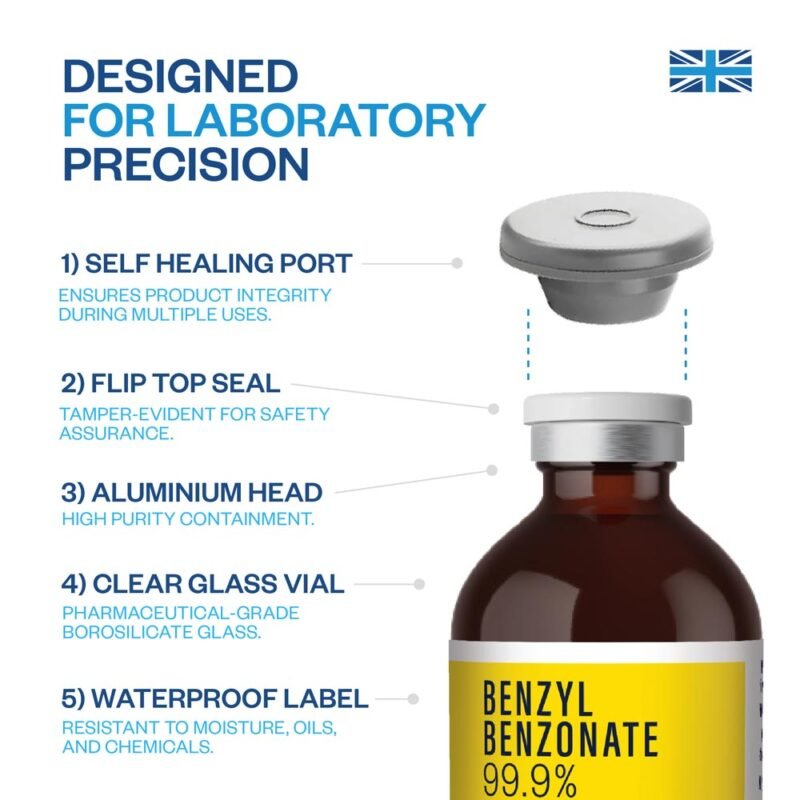
Benzyl Benzoate (with self-healing port, where applicable)
Important Notice: Please observe all safety information. The buyer assumes all responsibility for safety and for any use not in accordance with supplied directions and applicable regulations.
General Information
- Molecular Formula: C₁₄H₁₂O₂
- Chemical Name: Benzoic Acid Benzyl Ester
- CAS Number: 120-51-4
- EC Number: 204-402-9
- REACH Registration: 01-2119976371-33
Benzyl benzoate is the ester of benzyl alcohol and benzoic acid. It is typically supplied as a viscous liquid or solid flakes and has a weak, sweet, balsamic odour. It occurs naturally in a number of blossoms such as tuberose and hyacinth and is a constituent of Balsam of Peru and Tolu balsam.
Identification of the Substance
Product Name: Benzyl Benzoate
Product Code: BEBE
CAS No: 120-51-4
EC No: 204-402-9
REACH No: 01-2119976371-33
Synonyms: Benzoic Acid Benzyl Ester
Molecular Formula: C₁₄H₁₂O₂
Hazards Identification
- Classification (EC 1272/2008 – CLP):
- Classification (67/548/EEC): Xn; R22, N; R51/53
- Acute Toxicity (Oral), Category 4 — H302
- Hazardous to the Aquatic Environment (Chronic), Category 2 — H411

Signal Word: Warning
- Hazard Statements
- H302: Harmful if swallowed
- H411: Toxic to aquatic life with long-lasting effects
Precautionary Statements
- P264: Wash thoroughly after handling
- P270: Do not eat, drink or smoke when using this product
- P273: Avoid release to the environment
- P305 + P351 + P338: IF IN EYES: Rinse cautiously with water for several minutes. Remove contact lenses if present and easy to do. Continue rinsing
- P391: Collect spillage
- P501: Dispose of contents/container in accordance with regulations
Composition / Information on Ingredients
Substance: Benzyl Benzoate
Concentration: 100 %
Molecular Formula: C₁₄H₁₂O₂
CAS No: 120-51-4
EC No: 204-402-9
REACH No: 01-2119976371-33
Classification: H302, H411
First Aid Measures
- General: Consult a physician if unwell. Show this safety data sheet to medical personnel.
- Inhalation: Move person to fresh air and keep at rest. If breathing is difficult, administer oxygen. If not breathing, give artificial respiration and seek medical attention.
- Ingestion: Do not induce vomiting. Rinse mouth with water and drink plenty of water. Never give anything by mouth to an unconscious person. Seek medical attention if symptoms persist.
- Skin Contact: Wash immediately with plenty of water for at least 15 minutes. Remove contaminated clothing. Seek medical advice if irritation persists.
- Eye Contact: Rinse cautiously with water for at least 15 minutes while lifting eyelids. Seek medical attention if symptoms persist.
Most Important Symptoms
- Inhalation: Respiratory discomfort, shortness of breath
- Ingestion: Nausea, vomiting, diarrhoea, ataxia, convulsions
- Skin: Irritation
- Eyes: Irritation
Medical Attention Treat symptomatically.
- Firefighting Measures
- Suitable Extinguishing Media: Alcohol-resistant foam, dry powder, carbon dioxide, water spray
- Unsuitable Extinguishing Media: Water jet
Special Hazards: Thermal decomposition may release carbon monoxide and carbon dioxide. Product may be combustible at elevated temperatures.
Protective Equipment for Firefighters: Use self-contained breathing apparatus and full protective clothing.
Accidental Release Measures Personal Precautions: Wear suitable protective equipment. Ensure adequate ventilation. Avoid contact with skin and eyes. Remove sources of ignition.
Environmental Precautions: Avoid release into the environment. Prevent entry into sewers, surface water, groundwater, or soil.
Methods for Cleanup: Solid form: Collect using a shovel and place into a suitable waste container.
Liquid form: Absorb with inert material and collect for disposal.
Handling and Storage
- Handling: Handle in accordance with good industrial hygiene. Avoid inhalation of vapours or mist. Avoid contact with skin and eyes.
- Storage: Store in a cool, dry, well-ventilated area in tightly closed containers. Keep away from heat, light, oxidising agents, strong acids, and alkalis. Keep away from food and drink.
- Exposure Controls / Personal Protection
- Engineering Controls: Adequate ventilation, eyewash stations, safety showers.
- Personal Protective Equipment
- Eye Protection: Chemical safety goggles (EN 166)
- Gloves: Chemical-resistant gloves (EN 374)
- Clothing: Protective long-sleeved clothing
- Respiratory Protection: Use approved respirator if vapours or aerosols are present