Spend £150 for 20% Off | Spend £500 for 30% Off
Spend £150 for 20% Off | Spend £500 for 30% Off




£26.99
| Volume Pricing | |
|---|---|
| Spend £150+ (20% off) | £23.12 |
| Spend £500+ (30% off) | £20.23 |
Spending over £1000? Email us your order and we will custom price.
Free shipping on orders over £20

ALL ARTICLES AND PRODUCT INFORMATION PROVIDED ON THIS WEBSITE ARE FOR INFORMATIONAL AND EDUCATIONAL PURPOSES ONLY.
The products offered on this website are furnished for in-vitro studies only. In-vitro studies are performed outside of the body. These products are not medicines or drugs and have not been approved to prevent, treat or cure any medical condition, ailment or disease. Bodily introduction of any kind into humans or animals is strictly forbidden.
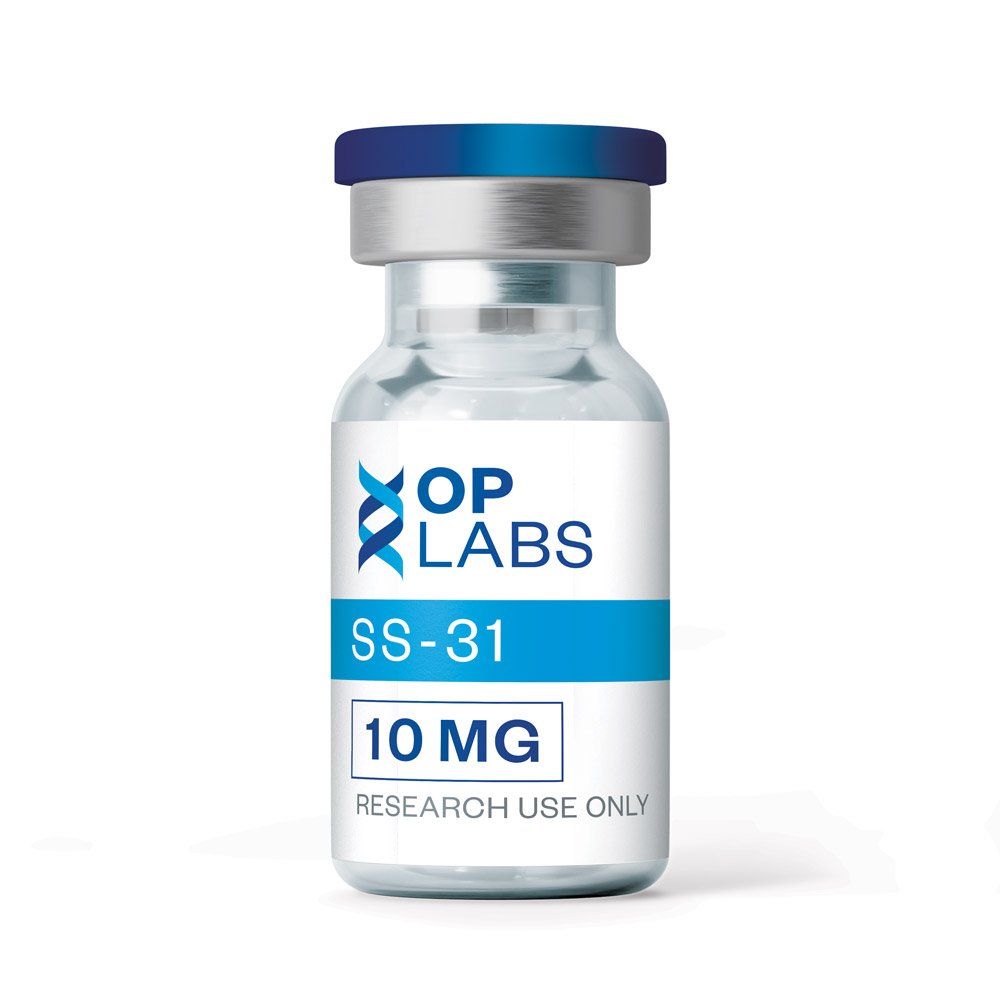
SS-31 (elamipretide) is a synthetic aromatic–cationic tetrapeptide used in research into mitochondrial biology and oxidative-stress–associated signalling pathways. In experimental systems, SS-31 has been reported to associate with cardiolipin-rich mitochondrial membranes, and is used to investigate how peptide–membrane interactions influence mitochondrial function (e.g., respiration-linked readouts), reactive oxygen species (ROS) handling, and downstream cellular stress responses. Observed outcomes depend on concentration, exposure duration, and model system and are used to study mechanisms rather than defined physiological outcomes.
• Mitochondrial bioenergetics and membrane interaction studies (including cardiolipin-associated systems)
• Oxidative stress / ROS signalling investigations in cellular and biochemical models
• Models examining mitochondrial dysfunction, membrane potential, and respiration-associated readouts
• Reference compound in peptide–mitochondria interaction research
• Weigh under dry conditions; peptide is hygroscopic
• Reconstitute in sterile water or appropriate buffered aqueous solution depending on assay requirements
• Avoid vigorous agitation during dissolution
• Filter sterilize if required (e.g., 0.22 µm) immediately prior to use
• Aliquot and store reconstituted solutions at –20 °C (or lower) to reduce freeze–thaw cycles
• Inspect solutions for precipitation or changes in clarity before use in sensitive assays
Purity: ≥ 99 %
Appearance: White to off-white lyophilised powder
Peptide Type: Synthetic mitochondria-targeting tetrapeptide
Molecular Formula: C32H49N9O5 (free base)
Molecular Weight: ~639.78 g/mol (free base)
Solubility: Water, buffered aqueous solutions
Storage: –20 °C, desiccated, protected from light
Pack Size: 10mg
• Experimental behaviour of SS-31 is influenced by assay format, membrane composition, concentration, and exposure duration
• Salt form (e.g., acetate vs hydrochloride) can affect molecular weight, solubility, and handling
• Buffer composition, pH, ionic strength, and oxidizing environments may affect peptide stability and assay performance
• Appropriate controls are recommended to distinguish specific from non-specific effects
• Intended strictly for laboratory research use; not for human or veterinary application